Africa’s richest country gets €500 million loan from Germany for fossil-fuel move.
Germany has approved a €500 million ($582 million) loan to support South Africa’s transition away from fossil fuels, deepening its financial commitment to the country’s decarbonization efforts under the Just Energy Transition Partnership (JETP).
The 13-year facility, provided through the German state-owned development bank KfW and implemented by the German Society for International Cooperation (GIZ), includes a three-year grace period and carries a fixed interest rate of 4.31%, the South African National.
The loan builds on two prior agreements finalised in 2022 and 2023, bringing Germany’s total concessional loan support to South Africa via KfW to €1.3 billion.
The funding is part of Germany’s pledge under the broader $8.3 billion JETP package launched at COP26, which also includes financial backing from other major donors such as France, the UK, the US, and the EU.
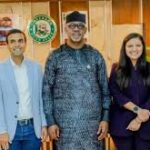
The latest round of financing will help bolster South Africa’s short- and medium-term energy security while advancing its decarbonization goals, said Finance Minister Enoch Godongwana.
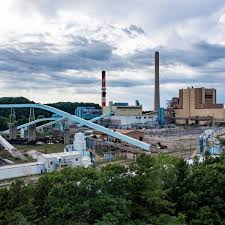
South Africa generates approximately 80% of its electricity from coal, making it the most carbon-intensive economy among the G20 nations.
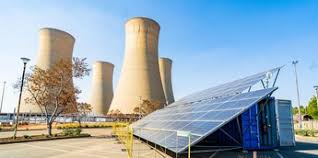
The country’s ageing coal-fired power fleet has also contributed to chronic electricity shortages, prompting urgent calls for investment in renewable energy infrastructure.
However, the government estimates that fully transitioning away from fossil fuels, such as coal, which currently accounts for 80% of the country’s electricity generation and a third of its liquid fuel production, will require an estimated investment of 1.5 trillion rand ($78.4 billion).
Source: Africabusinessinsider