
Trump seeks rare earths in talks with Central Asian nations.
US President Donald Trump said during a meeting with five Central Asian countries on Thursday that he would look to diversify critical minerals purchases, as the US seeks to address China’s dominance in rare earths critical to advanced technology manufacturing.
“One of the key items on our agenda is critical minerals,” Trump said at a dinner with the leaders of Kazakhstan, Uzbekistan, Kyrgyzstan, Tajikistan and Turkmenistan at the White House on Thursday. “In recent weeks, my administration has strengthened American economic security by forging agreements with allies and friends across the world to broaden our critical mineral supply chains.”
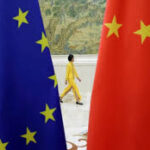
Last week, Trump brokered a deal with China’s Xi Jinping that saw the US roll back tariffs in exchange for Beijing removing planned export restrictions on critical minerals used in everything from cell phones to jet engines. But with only a temporary truce in place, the White House is continuing to seek alternative suppliers.
“We’re strengthening our economic partnerships, improving our security cooperation, and expanding our overall bonds,” said Trump, who is eager to bolster his ties with the energy- and mineral-rich region.
The summit marked the first time a US president has hosted the group — known as the C5+1 — at the White House, as Washington tries to assert influence in a region long dominated by Russia and China. Former US president Joe Biden held a similar gathering in New York in 2023.
The five Central Asian states possess vast mineral resources, including rare earth elements and uranium, which played a key role in the Soviet Union’s nuclear programme.
US-based Cove Capital LLC has taken a 70% ownership stake in two deposits from Kazakhstan’s sovereign wealth fund, which will retain 30% ownership, according to a statement seen by Bloomberg.
Tajikistan President Emomali Rahmon told Trump that his country wanted to expand economic and trade cooperation with the US, pitching his rare earths deposits as a way to help manufacture the next generation of artificial intelligence data centres.
The Central Asian states also stand to benefit from a partnership with the US, as they have been looking to diversify their economic and security relationships after Russia’s full-scale invasion of Ukraine in 2022, which sparked a wave of international sanctions against Moscow.
Source: Theedgemalaysia