
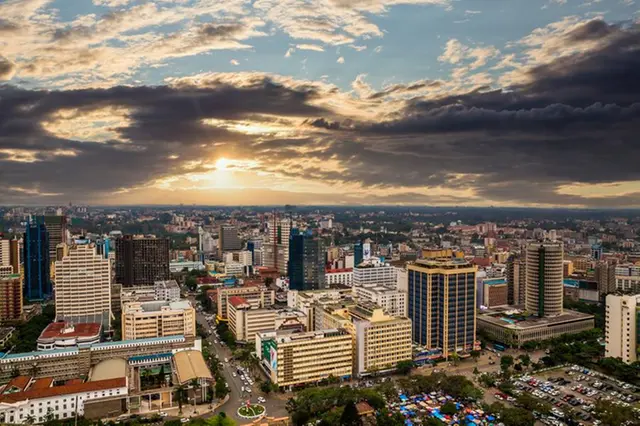
Africa’s $4trln infrastructure dream faces tough realities.
Despite being home to an estimated $4 trillion in domestic capital, Africa continues to struggle with financing its infrastructure ambitions.
A new report reveals that shallow capital markets, weak financial intermediation and institutional bottlenecks are stalling efforts to mobilise these vast resources – just as external financing dries up amid global economic turbulence.
With donor budgets shrinking and protectionist policies rising, the continent faces a critical juncture: either unlock its internal wealth or risk falling further behind in its development goals.
New findings from Africa Finance Corporation (AFC) research conservatively estimate the combined value of Africa’s domestic capital pools at more than $4 trillion.“We estimate the continent’s domestic capital pools at over $4 trillion, including more than $1.6 trillion across the non-bank sector: $455 billion in pensions, $320 billion in insurance, $250 billion in public development banks, $150 billion in sovereign wealth funds and $473 billion in foreign reserves, including $38 billion in gold holdings,” states the latest State of Africa’s Infrastructure Report 2025 by AFC.“These are the most robust bottom-up estimates, though actual figures are likely even higher due to data gaps in key markets.
“Capital markets remain shallow and fragmented, constraining their ability to pool and allocate domestic savings at scale. Strengthening regulatory harmonisation, enabling cross-border listings and operationalising platforms such as the African Securities Exchanges Association and the African Exchanges Linkage Project will be vital to creating a liquid and investable regional capital ecosystem,” it adds.“Fragmented capital markets and pervasive informality further constrain mobilisation. Unlocking these domestic resources at scale is essential to finance Africa’s infrastructure, industrialisation and inclusive growth.”In many countries, domestic capital markets are characterised by low liquidity, a limited range of investable instruments and a weak pipeline of bankable infrastructure projects.
This limits the supply of suitable long-duration assets and reinforces conservative portfolio behaviours.
Weak financial intermediation – where institutions connecting savers and borrowers are inefficient or unstable – hinders capital flow and slows economic growth.
According to the report, Africa’s traditional sources of external financing – official development assistance, foreign direct investment and sovereign borrowing – are increasingly insufficient, procyclical and often misaligned with the continent’s long-term development priorities. “These constraints have been compounded by a shifting global economic landscape: tighter international financial conditions, declining donor budgets and a resurgence in protectionist policies in advanced economies, which have reduced the availability and predictability of external capital.
Africa’s pension funds now manage approximately $455 billion in assets.
The insurance sector also holds significant untapped potential. Insurance assets across 28 countries—representing over 80 percent of the continent’s GDP—stand at $320 billion, with South Africa alone accounting for nearly $258 billion, or around 79 percent of the total.
However, insurance penetration remains extremely low in most markets, both in terms of premium volumes and population coverage.
Source: Zawya