Can the West break China’s grip on rare earths?
The trade conflict between the US and China shows no signs of easing, with both sides digging in, hoping they can endure the economic pain longer than the other.The dispute has once again thrust a group of metals known as rare earth elements into the global spotlight.
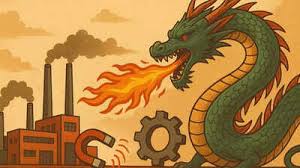
China dominates every stage of the rare-earth supply chain, controlling nearly 70% of global mining and producing as much as 90% of the world’s processed rare earths.A report published by the International Energy Agency this week noted that such “high market concentration” would leave global supply chains in strategic sectors — such as energy, automotive, defense and AI data centers — “vulnerable to potential disruptions.”Earlier this month, Beijing tightened control over the rare-earth supply.
Starting December 1, foreign companies anywhere in the world will need approval from the Chinese government to export products containing even trace amounts of rare-earth materials that originated in China or were produced using Chinese technology.
The move came in response to the US expanding the list of Chinese firms denied access to most-advanced US semiconductor chips and other technologies.
China’s decision has stirred concerns over possible supply shortages that could disrupt production of other products such as electric vehicles, defense equipment and renewable energy systems.US Trade Representative Jamieson Greer criticized Beijing’s new measures as “incredibly aggressive” and “disproportionate,” while EU trade chief Maros Sefcovic called them “unjustified and harmful.”Both the US and the EU are in talks with the Beijing to ensure adequate rare-earth supplies for their firms.
Rare earth elements have become an integral part of modern life thanks to their unique physical, magnetic and chemical properties. They are key to making magnets that retain their magnetic properties indefinitely without the need for external power.The metals are essential ingredients in all kinds of high-tech goods, including smartphones, laptops, hybrid cars, wind turbines and solar cells, among other things.There are important defense applications as well, such as jet fighter engines, missile guidance systems, antimissile defense, space-based satellites and communication systems.
Despite what their name implies, rare earths aren’t particularly rare and are moderately abundant in the Earth’s crust, some even more plentiful than substances like copper, lead, gold and platinum.However, they are seldom found in high concentrations to be extracted economically. Besides China, deposits of rare-earth metals can be found in countries like Canada, Australia, the US, Brazil, India, South Africa and Russia.Rare earths are typically divided into two categories according to the separation process: light rare earths and heavy rare earths.
Source: Timesofindia